
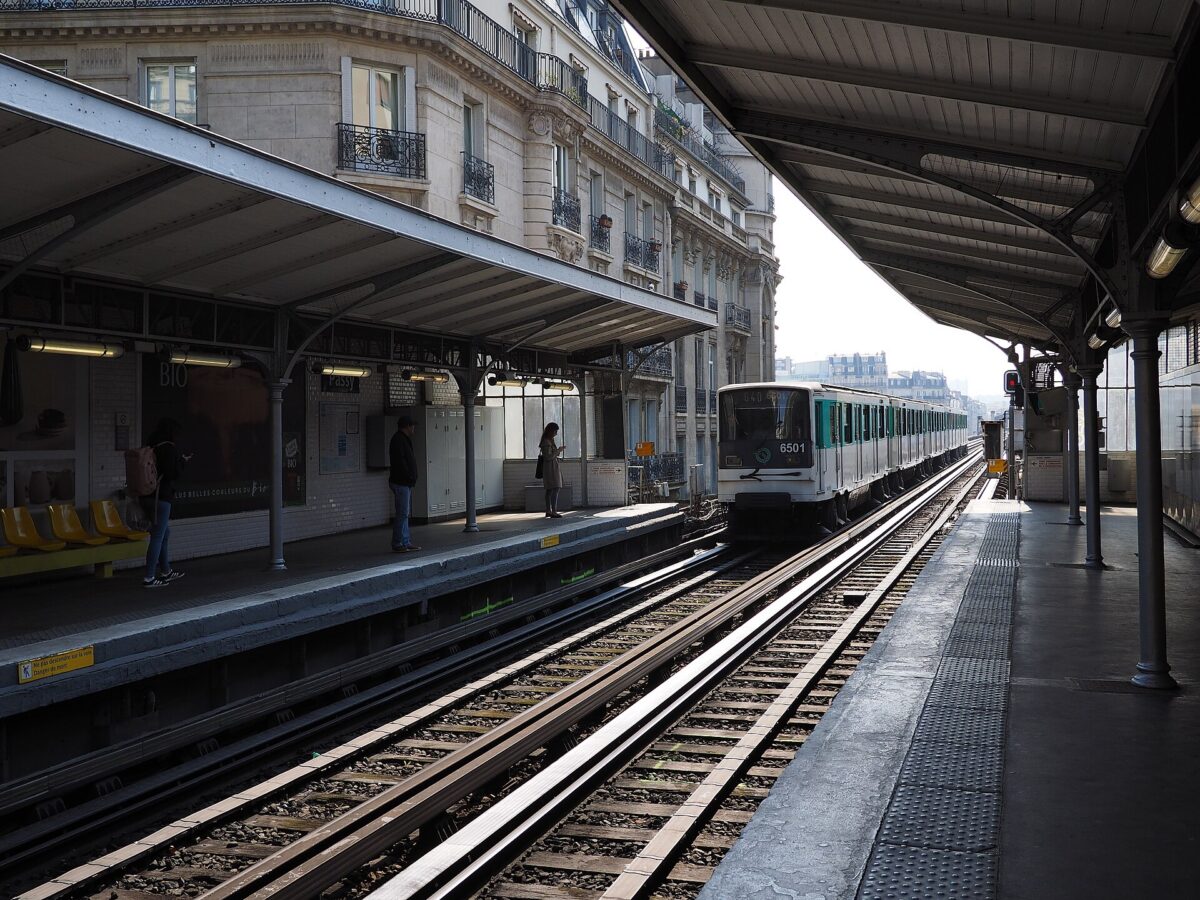
Paris Metro for Visitors: Tickets, Passes and Tips

Which Paris metro ticket should you buy? Compare single tickets, Navigo Easy, day and week passes, with 2026 prices and tips for visitors.

For most visitors, the simplest way to ride the Paris metro is a reloadable Navigo Easy card topped up with single tickets, or a Navigo Jour or weekly pass if you will ride a lot. A single Metro-Train-RER ticket costs 2.55 euros in 2026, and one ticket works on metro, RER and Transilien trains inside the city area.

At a glance

  • Single Metro-Train-RER ticket: 2.55 euros (1.30 euros reduced), as of January 2026.
  • Single Bus-Tram ticket: 2.05 euros (1.05 euros reduced).
  • Navigo Jour (day pass): 12.30 euros for one day of unlimited travel, airports excluded.
  • Navigo weekly pass: 32.40 euros, all zones; it covers Monday to Sunday, not seven days from purchase.
  • Airport ticket: 14 euros (7 euros reduced), a separate product for airport trips.
  • First metro trains leave the terminus stations around 5:30 am; the last ones run to about 1:15 am, or about 2:15 am on Friday and Saturday nights.

The ticket options, compared

TicketPrice (2026)Best for
Metro-Train-RER ticket2.55 eurosA few trips over a short stay
Bus-Tram ticket2.05 eurosBuses and trams only
Navigo Jour12.30 eurosA day with 5 or more rides
Navigo weekly32.40 eurosA Monday-to-Sunday stay with daily rides
Paris Visite30.60 euros (1 day) to 78 euros (5 days)Visitors who also need the airports
Airport ticket14 eurosOne-way airport transfers

Do the math before you buy a pass. Five single rides cost 12.75 euros, so a day pass only pays off if you plan more than about five trips that day. If you mostly walk, singles are cheaper.

Navigo Easy: the card most visitors need

Paper tickets are being phased out in favor of reloadable cards and phone tickets. Navigo Easy is an anonymous card with no photo or sign-up. You buy it once for a small card fee (reported as about 2 euros, so check the current fee) and then load single tickets or multi-trip packs onto it. You can also load the Paris Visite pass onto it.

The related Navigo Decouverte card has a photo and name, and it is the one used for weekly and monthly passes. You only need it if you want the weekly pass.

How to use the metro

  1. Check the line number and the direction, which is named after the last station on the line.
  2. Tap your card or ticket on the reader at the turnstile and wait for the light to turn green.
  3. Follow the orange “Correspondance” signs when you change lines.
  4. Follow “Sortie” signs to leave. Keep your ticket until you exit in case of an inspection.

One ticket lets you change between metro lines, and between metro and RER inside the city, without paying again. Check the official fare rules for changes between metro and bus, since the Bus-Tram ticket is a separate product.

Hours and late-night options

Metro lines start at about 5:30 am. The last trains run around 1:15 am from Sunday to Thursday and around 2:15 am on Friday and Saturday nights and the eve of public holidays. After that, the Noctilien night buses take over. Times differ a little by station and line, so check the RATP site before a late night out.

Tips to save time and money

  • Travel with light luggage. Many stations have stairs and no elevator, and trains get crowded at rush hour.
  • Buy tickets only from official machines, the RATP app or staffed counters. Avoid anyone offering to “help” at a machine.
  • Keep your phone and bag close in crowded cars; see our note on staying safe in crime in Paris.
  • Do not buy an airport pass by mistake. Standard tickets do not cover the airport trips; use the 14 euro airport ticket or a Paris Visite pass, and check the official site for your route.
  • Station names in announcements can be hard to catch. Watch the stops on the line map above the doors.

Planning around the metro

Before you buy a pass, work out how long you are staying: our guide on how many days you need in Paris helps. If you are still choosing dates, read going to Paris at the right time. Arriving soon? See getting to Paris by air and getting to Paris by train. Planning museum visits or shows? Read tips on buying tickets in Paris.

FAQ

Is the Paris metro safe?

Millions of people ride it daily. Pickpocketing is the main risk at busy stations and on crowded trains, so keep bags zipped and in front of you.

Can I pay with a contactless bank card?

Do not count on it. Contactless bank card payment at metro gates has not been the standard for Paris visitors, so check the official sites for the current situation. A Navigo Easy card or phone ticket is the safe choice.

Is a day pass worth it?

Only on days with more than about five rides. At 12.30 euros against 2.55 euros per single ticket, five rides cost 12.75 euros.

Do children pay?

Children under 4 travel free, and there are reduced fares for children 4 to 9 and for some other groups. Check the official fare page for age rules.

Last checked: October 2026. Fares can change, so confirm on the official sites before you travel.

Sources

How Many Days Do You Need in Paris? A Realistic Guide

How many days in Paris? Three is the minimum and four to five is ideal for a first trip. Plan around closing days and see what each length covers.

For a first visit, plan on three days at the minimum and four to five days if you can. Three days covers the big monuments if you group them by area; a week adds Versailles and a slower pace. Here is how to decide for your own trip.

At a glance

  • 1 day: a layover taster. Stick to outdoor sights.
  • 2 days: workable but brisk. Pick one major museum, not three.
  • 3 days: the practical minimum for the main monuments.
  • 4 to 5 days: the comfortable first-trip length, with time for neighbourhoods and rest.
  • 7 days: adds Versailles, more museums and less touristy areas.

How many days do you really need?

The city of Paris’s own visitor guidance describes three days as the minimum to see the major monuments (Eiffel Tower, Louvre, Notre-Dame, Montmartre and the Seine banks), provided you group visits by neighbourhood and book busy sites ahead. It calls four to five days ideal for a first trip, and a week the comfort option (see Sources).

The reason is simple: the sights are spread across the city, queues and security checks eat time, and you will want a long lunch. Counting attractions is the wrong approach; count how many areas you want to see.

One and two days in Paris

With one day, favour walking and outdoor viewpoints over museums. With two days, choose a single anchor museum and one or two neighbourhoods. If you are torn between two and three days, the extra day is usually worth it.

Three days: the practical minimum

Three days lets you cover one major museum, a tower or viewpoint, the islands in the Seine and one hilltop or village-style district. Group sights by area to avoid crossing the city repeatedly. Our guides to the Eiffel Tower, the Louvre and Notre-Dame de Paris give background on each.

Four to five days: the sweet spot

Four or five days gives you slack for a Marais walk or a second museum, plus time to sit in a cafe without checking the clock. It also absorbs a bad-weather day or a late flight. If you are visiting in winter, daylight is short, so extra days help; see our overview of when to go to Paris.

A week: adding Versailles and more

A week adds the Palace of Versailles, further museums and quieter neighbourhoods. Versailles needs most of a day, and the Chateau and Trianon estate are closed on Mondays (the gardens and park are open daily), so schedule it for another day of the week.

A simple way to split your days

Rather than a rigid timetable, give each day a theme. This is a planning approach, not an official route, so adjust it to your interests and opening days.

Trip lengthDay-by-day shape
3 daysDay 1: riverside landmarks and Notre-Dame area. Day 2: one major museum plus the Eiffel Tower area. Day 3: a hilltop district such as Montmartre and a relaxed evening.
4 to 5 daysAdd a Marais and Left Bank day, then a flexible day for a second museum, shopping or a rest.
7 daysKeep the three-day core, add a full Versailles day, and use the remaining days for neighbourhoods you like.

Common planning mistakes

  • Packing every day from opening to closing. Leave a gap in the afternoon.
  • Ignoring closing days, then discovering your chosen museum is shut.
  • Crossing the city several times because sights were not grouped by area.
  • Leaving ticket decisions to the last minute for the busiest sights; check each official site for current booking rules.
  • Treating the first and last days as full days when flights take half of each.

If you are unsure, book the shorter trip and keep one day unplanned. It is easier to fill a free day with a neighbourhood walk than to squeeze in everything you missed.

Closing days that affect your plan

PlaceClosedNotes (checked October 2026)
LouvreTuesdays, plus 1 Jan, 1 May, 25 DecOpen until 6pm most days, until 9pm Wednesday and Friday; last entry one hour before closing
Palace of Versailles (Chateau, Trianon)Mondays, plus 25 Dec, 1 Jan, 1 MayGardens and park open every day

Build your itinerary around these closing days first, then fill in the rest. Hours and ticket rules change, and the Louvre has required timed reservations for all visitors during some periods, so check the official site for your dates.

Factors that change the answer

  • Pace: two museums in one day is tiring; plan one major indoor visit per day.
  • Season: summer queues and winter short days both argue for an extra day.
  • Jet lag: if you arrive from far away, treat day one as half a day.
  • Travelling with children or older relatives: allow more days and fewer sights per day.
  • Arrival: if you come by rail, see getting to Paris by train to estimate arrival time.

FAQ

Is two days enough for Paris?

It is enough for a brisk taste: one big museum, a few outdoor landmarks and an evening walk. Most guidance suggests three days if you can manage it.

Is one day in Paris worth it?

Yes, for a layover, if you focus on outdoor sights and skip queues for several major museums.

Can I see the Louvre in one visit?

Not entirely. Plan a selection; the city’s guidance suggests allowing two to three hours for part of the collections.

Should I include Versailles in a first trip?

Only if you have around five or more days. It takes most of a day and is closed on Mondays.

Last checked: October 2026.

Sources

The Centre Pompidou in Paris

home to one of the world's most important museums of modern art
The New Cultural Institution

Pompidou is named after the 1969 French President Georges Pompidou. He launched the idea of creating a new cultural institution in Paris dedicated to modern art. This new cultural center fascinated 650 admissions on its 1971 competition. Richard Rogers, Renzo Piano and Gianfranco Franchini submitted their architectural winning project. It was fascinating for it made practical elements such as escalators, air conditioning and water pipes to the outside of the building which resulted to a more spacious inner space for the exhibition of art works.
Continue reading “The Centre Pompidou in Paris”

The Dark Conciergerie Royal Palace

the Palais de la Cité
It played a dark role in the French Revolution and the Reign of Terror

Located on the west side of the Île de la Cité, the Conciergerie Royal palace (the Palais de la Cité) at first and later a prison, the Conciergerie played a dark role in the French Revolution and the Reign of Terror. The remarkable site was chosen by Phillippe le Bel (Philip the Fair) in the early 14th century so that he could build a palace that would be a sign of his wealth and stature.
Continue reading “The Dark Conciergerie Royal Palace”

Chartres Cathedral, a Theological Aspiration

The designs are Carvings of Biblical images
The North Porch of Chartres Cathedral

At the opposite end of the spiritual spectrum from decadent Versailles, Chartres cathedral represented the highest architectural and theological aspirations of the Middle Ages in France. The Chartres cathedral was much the same in medieval times as it is now, which should give you a sense of how impressive it must have been in 1260, when it was completed. Rodin described it as the French Acropolis, and once you’ve seen it you’ll be hard pressed to disagree with him.
Continue reading “Chartres Cathedral, a Theological Aspiration”

Different Era of Paris Architecture

A Renaissance Mansion
The only 16th century hotel left in Paris

There are a lot of styles you will see in Paris architecture. However, it’s significant to point out that very few structures were built in one particular method. These enormous structures of Paris architecture may look centuries to complete, where plans were modified and a lot were changed, but these were still put into completion at present.
Continue reading “Different Era of Paris Architecture”

Smooth-Sailing on the Seine River

Eiffel Tower View from the Seine River
Seine River provides view for some of the most visited attractions in Paris

Seine River, famous as romantic background photographs of Paris, is a smooth-sailing river and commercial waterway with Ile-de-France and Haute-Normandie in France. The river attracts so many tourists in Paris; there are excursion boats that offer sight-seeing tours within the city of Paris. Its whole length of boating can end in the Bay of the Seine region of the English Channel and as far as Burgundy near the Swiss Alps. A long way to go, but is negotiable by commercial riverboats because of the fact that there are just limited portions allowed for sight-seeing.
Continue reading “Smooth-Sailing on the Seine River”

An underground adventure..Paris Catacombs

les Carrieres de Paris
Known as the quarries of Paris

The Paris Catacombs is one of the famous burial places in Paris, France. Although widely known as the catacombs its official name is “les Carrieres de Paris” translated as quarries of Paris. It is an arrangement of cavernous tunnels and rooms located in what were Roman-era limestone quarries. It was in the late 18th century, the quarries were converted into a mass tomb.
Continue reading “An underground adventure..Paris Catacombs”

Carnavalet Musee..travel through time

It is situated in the Marais district.
Remembrance to the history of the city of Paris

The Carnavalet Musee is built in remembrance to the history of the city of Paris. The space occupies two adjoining mansions Hotel Carnavalet and the former Hotel Le Peletier de Saint Fargeau. President of the Parliament in the year 1548, Jacques des Ligneris, ordered the  construction of the mansion tht is known today as Hotel Carnavalet and was completed after  twelve years. The widow of Francois de Kernevenoy, bought the building and was later named  Carnavalet. In 1654, Claude Boisleve purchased the mansion. He commissioned a well-known  architect, Francois Mansart to make general renovations.
Continue reading “Carnavalet Musee..travel through time”